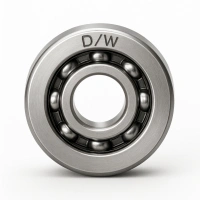
D/W R1-4
D/W Series Stainless Steel Miniature Bearings
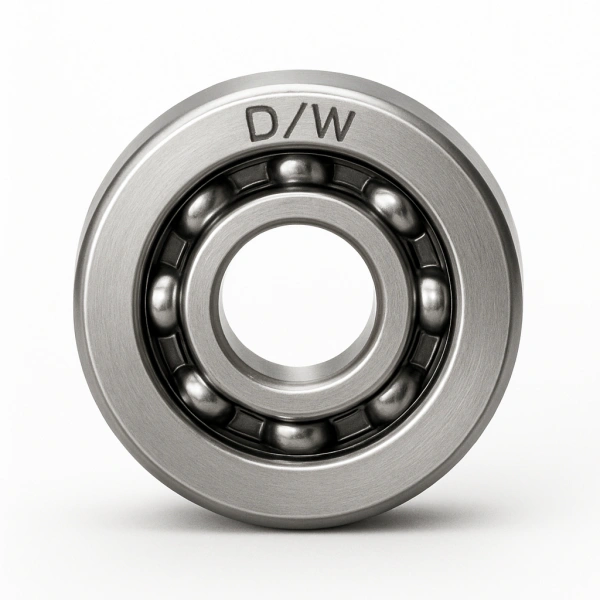

Image may differ from product. See technical specification for details.
Part No.
Part No.
D/W R1-4
Basic Information
Bearing type
Ball
System of measurement
Inch
Construction
Single Row
Weight
0.0003 kg
Tolerance class
P0
Seal type
Open
For load direction
Radial
Main Dimensions
Bore diameter
0.07813"
Bore diameter tolerance
-0.00019" to 0.00019"
Outside diameter
0.25"
Outside diameter tolerance
-0.0007" to -0.00031"
Width
0.0937"
Width tolerance
-0.005" to 0"
Performance
Temperature range
-30° to 120 °C
Radial dynamic load rating
37 lbf
Radial static load rating
11 lbf
Limiting speed
100 X 1000 rpm
Lubrication
None
Radial internal clearance
CN
Materials
Ring material
Stainless Steel
Ball material
Stainless Steel
Cage material
Stainless Steel
Environment & Compliance
REACH
Compliant
ROHS
Compliant
Technical Drawings
No drawings available at the moment, will be launched soon
In Stock
Price available upon request.
Our sales team will respond within 24 hours with a competitive quote tailored to your requirements.
REQUEST A QUOTE
- Fast delivery
- Enjoy discounts on bulk purchases
- Secure Payment
- Fast Global Shipping
D/W R1-4 Bearing Product Overview & Core Advantages
The D/W R1-4 is a single row deep groove ball bearing engineered for precision applications requiring high reliability in compact spaces. Manufactured entirely from stainless steel, it offers excellent corrosion resistance. Its open design and P0 tolerance class ensure smooth operation and reliable performance under radial loads, making it an ideal choice for instruments and devices where space and weight are critical constraints.
D/W R1-4 Bearing Model Code Explained, Specifications & Naming Convention
| Code Segment | Technical Meaning |
|---|---|
| D/W | Manufacturer / Series Designation |
| R1-4 | Bore Size Code (0.07813") |
| (No Suffix) | Open (non-shielded/non-sealed) construction |
D/W R1-4 Bearing Structural Features & Performance Benefits
- Compact & Lightweight Design: With an ultra-small bore diameter of 0.07813" and a total weight of just 0.0003 kg, this bearing is engineered for miniature assemblies and applications with severe space limitations.
- Corrosion Resistance: All components, including rings, balls, and cage, are made from stainless steel, providing reliable operation in humid or mildly corrosive environments.
- Precision Performance: Built to P0 tolerance class with a CN radial internal clearance, it delivers consistent, low-vibration operation suitable for precision mechanisms.
- High-Speed Capability: The open design and stainless-steel construction contribute to a limiting speed of 100,000 rpm, enabling use in high-speed spindles and small motors.
D/W R1-4 Bearing Typical Application Areas
This bearing is ideally suited for:
- Precision Instruments and laboratory equipment
- Small DC Motors and miniature gearboxes
- Medical devices and dental handpieces
- Optical encoders and scanning mechanisms
- Radio-controlled models and drones